
-
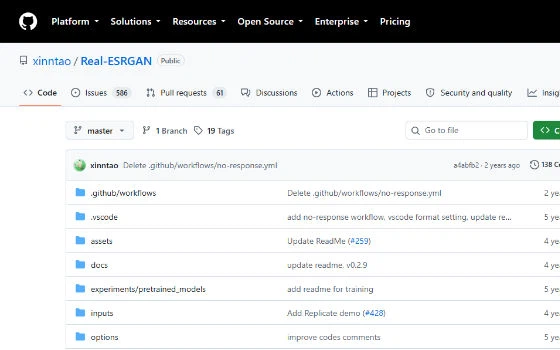
Real-ESRGAN review: the algorithm underneath a shelf of enlargement apps
Not an application but a paper and its reference implementation, trained purely on synthetic degradations and loosely licensed enough that a whole shelf of GUI products wraps it. Three ways in, with different costs.
-
Upscayl review: free desktop upscaling that never uploads your files
A desktop application that enlarges images on your own graphics card and touches no network. The catch is stated early: it needs a Vulkan-capable GPU, and a cloud tier handles the jobs your hardware cannot.

-
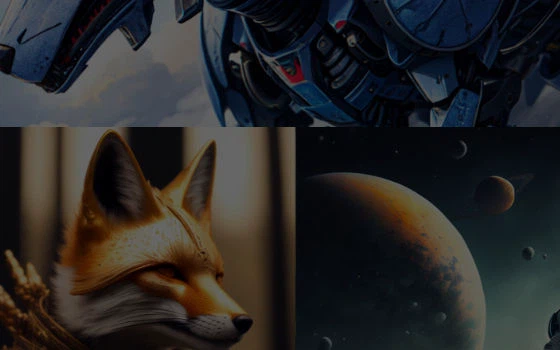
Baidu AI Art opens the Wenxin Yige engine as an API, eight images a call
A text-to-image service sold to developers rather than a drawing website: the in-house engine is exposed through two endpoints, handles plain text, a reference image and text-driven edits, and returns up to eight images per call.
-
Kolors writes Chinese characters correctly and opens code and weights
A text-to-image model that draws Chinese hanzi correctly instead of producing gibberish, releases its code and weights, and plugs into an existing generative workflow — while the consumer entry now lives on another platform.

-
Adobe Firefly puts licence safety ahead of spectacle
The in-house models are trained only on licensed and public-domain material, output without a beta label is cleared for commercial work, and generative fill lives inside Photoshop instead of beside it.
-
Flux folds generation and editing into one set of weights
The compact member of the second generation does text to image, single-reference editing and multi-reference composition with the same weights, opens fully for commercial use, and runs on a mid-range gaming card.
-
Invoke opens on a canvas, not on a prompt box
A self-hosted image workstation under Apache 2.0 where generation and retouching share one infinite canvas, layers can carry their own prompts, and a node graph waits behind the canvas for anyone who needs a process they can repeat.
-
Fooocus hides the sampler and leaves you a prompt box
Built entirely on SDXL with the sampling parameters tucked behind presets. A GPT-2 prompt engine runs offline to fill in the details, so one short sentence is enough to get four finished pictures.
-
SD WebUI Forge keeps the old interface and rebuilds what sits under it
Same tabs, same parameter column, same model folder. The rewriting went into memory tracking and model support, so a card that struggled before now finishes the same job in half the time.
-
ComfyUI turns image generation into a diagram you can rewire
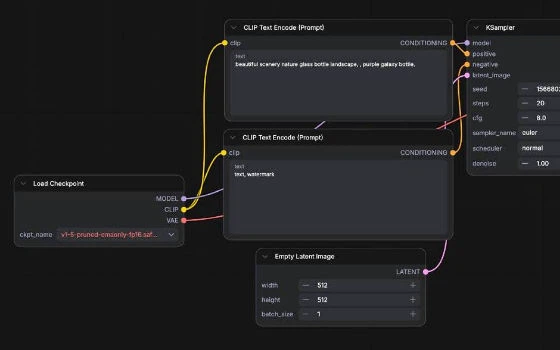
Every step becomes a box on an endless canvas, wired to the next. Save the graph as a file, drag a generated image back in to recover it, and run isolated environments so one bad node pack does not break the rest.
-
第 1 / 1 页