
Quarto 1.11 threads code, figures and layout into one line for technical docs
Summary
Quarto 1.11 lets a writer keep code, figures and layout on a single line of Markdown, rendering one source file to a web page, PDF, Word file, slide deck or ebook. The release also closes a certificate chain risk.
Recommend- Name
- Quarto
- Version
- 1.11
- Pricing
- Free
- Open source
- Open source
- Operating system
- WindowsmacOSLinux
- Website
- https://quarto.org/
- Updated
- 2026-11-06 23:00
Prose and code in the same file
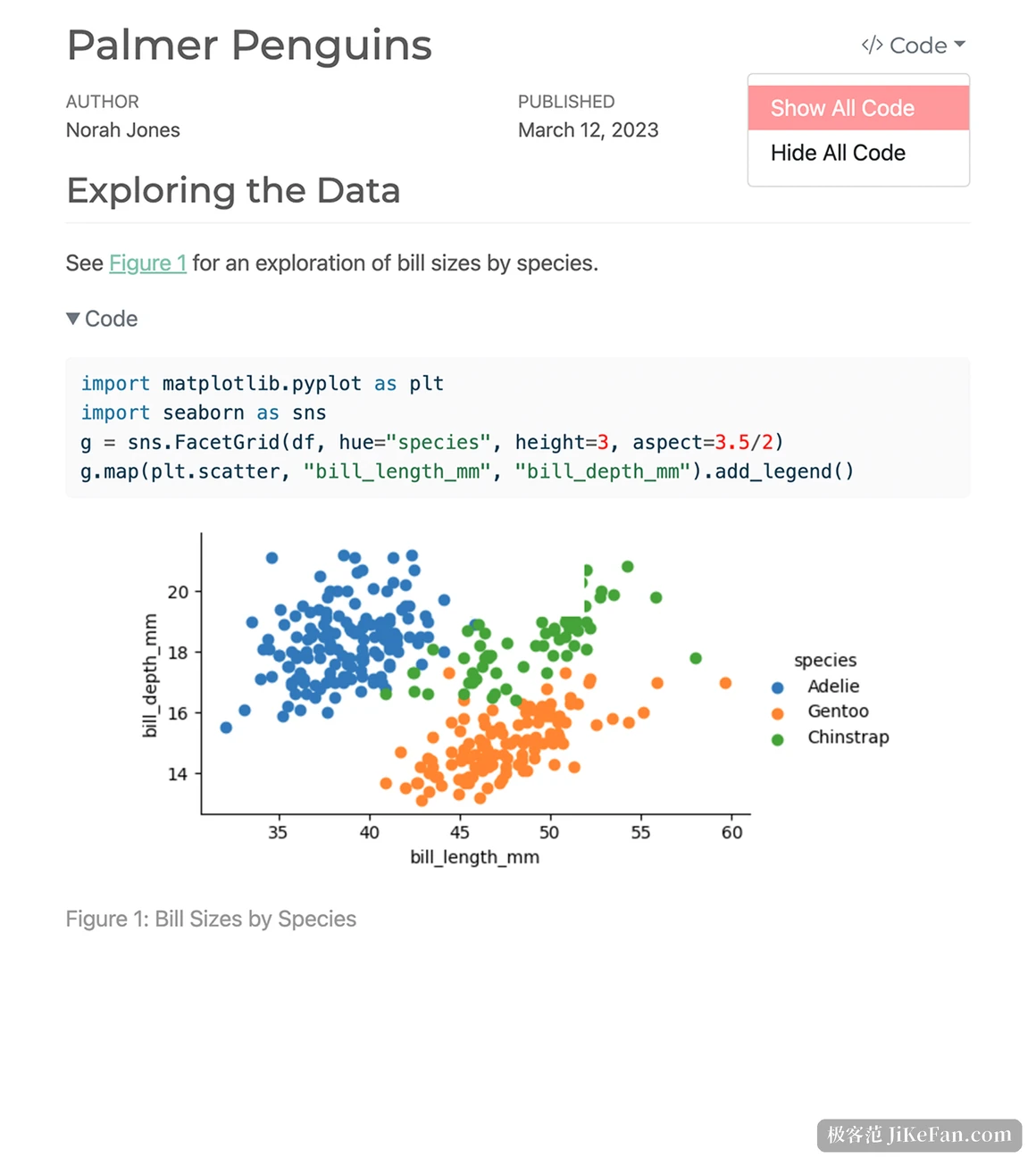
The usual way to write a technical document with data in it runs like this: produce a chart in a notebook, export it as an image, drag it into Word and lay the page out, then start over the moment the data changes. What Quarto wants to remove is exactly that shuttling. Maintained by Posit and built on top of Pandoc, it describes itself as an open source system for scientific and technical publishing. The author keeps a single plain text file with a qmd suffix, narrative text and executable code blocks live in that one file, and at render time the code runs first, figures and numbers fill in where they belong, and Pandoc turns the result into a finished document.
The point is not saving a few clicks. It is that the origin of every result stays traceable. Each number and each figure in the document corresponds to a stretch of code in the file, so a data update means rendering again, and the situation where the prose states a March conclusion while the figure is still February cannot arise. For reports and technical documents that have to be maintained for years, that matters more than a beautiful layout.
One source file, several finished products
The output formats reach wide: HTML pages, PDF, Word documents, ePub books and revealjs presentations, plus the ability to organise several documents into a website, a blog or a book. One source file can name several target formats at once, so the version for the projector and the version for print no longer need separate drafts. Writing happens in the Pandoc dialect of Markdown, where maths, citations, cross references, figure panels, callout boxes and advanced page layout are supported at the syntax level, and figure numbering reflows as content is added or removed, which takes away the manual numbering that goes wrong most often in long documents.
Code execution is not tied to one language. Python, R, Julia and Observable JavaScript all go straight into code blocks, the engine is chosen at render time, and a Jupyter notebook can be rendered as it stands. No particular editor is required either: VS Code, Positron, RStudio and JupyterLab all work, a visual Markdown editor is offered, and anyone who prefers plain text is equally fine with any text editor plus a command line.
Version 1.11 repairs the foundation
Quarto 1.11 arrived on 2 November 2026, earlier than the usual rhythm, and the reason was a security update. The bundled Deno runtime moves from 2.7.14 to 2.9.8, and the new version refuses certificates that carry the already broken eMudhra and emSign chains. The impact sits in publishing and fetching: quarto publish, quarto add and quarto use template, along with the TypeScript scripts Quarto runs, all make HTTPS requests, and an older version that trusted those certificates handed an attacker on the same network a chance to impersonate a site. The project states plainly that the fix will not be backported to the 1.10 series, so the release is the only route to it.
The price is a slightly higher floor for the machine. The bundled Deno 2.9.8 requires macOS 12 or later, so anything older has to be upgraded first, or the rendering engine and the formats that depend on it may fail to start.
Accessibility got substantial work
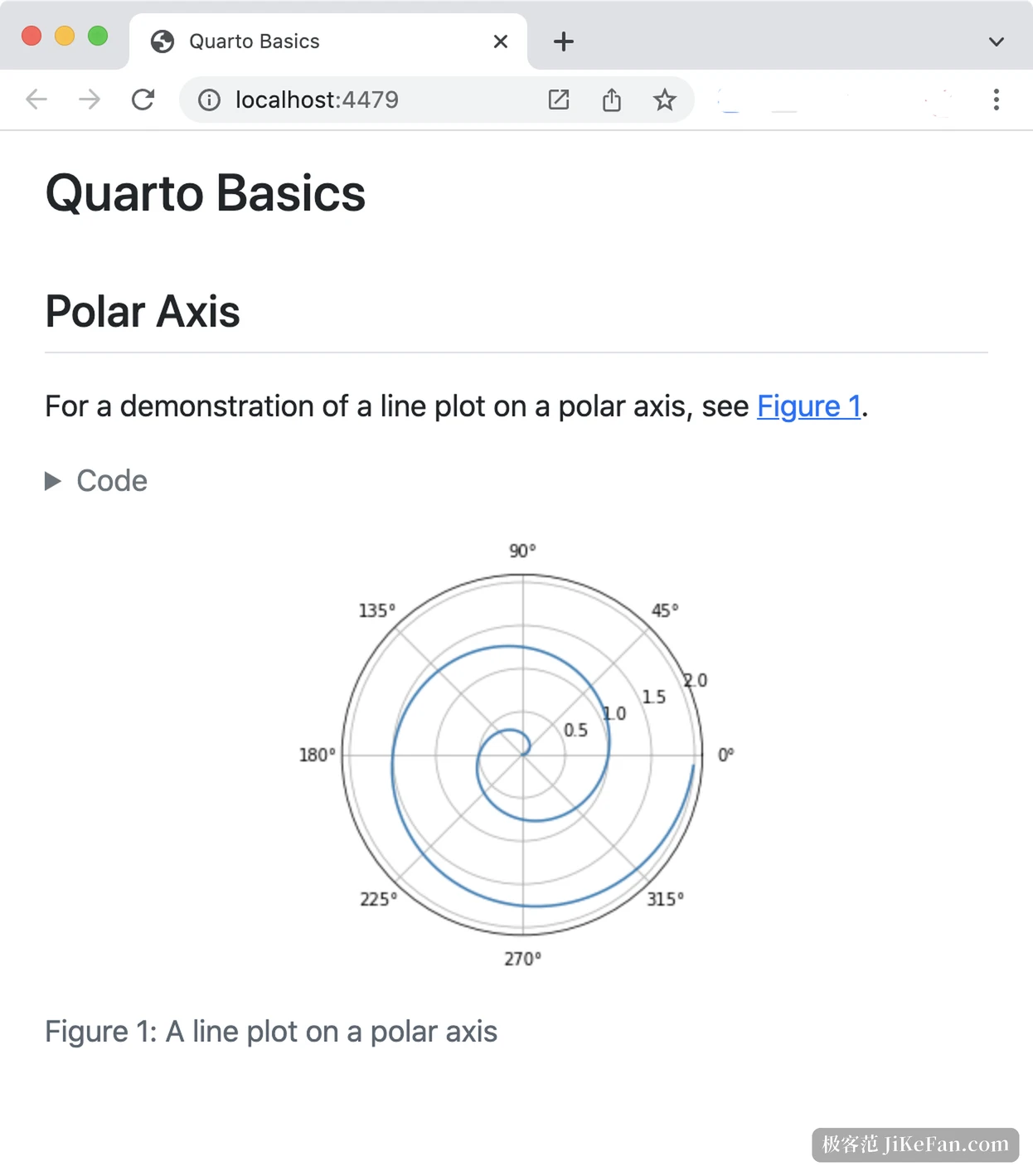
The other half of 1.11 lands on accessibility, and the changes sit where people actually use them. HTML documents with a Bootstrap theme, along with sites, books and dashboards, gain a link that jumps to the main content, so keyboard users no longer tab through the whole navigation. Sidebar sections on a site become buttons that a keyboard can operate. Scrollable code blocks and output areas can take focus and scroll in Safari. The popovers behind citations, footnotes, cross references and code annotations close with Esc. Visually there is a new two tone keyboard focus ring that stays visible even in forced colours mode.
Diagrams and presentations are covered too. Charts produced by Mermaid and Graphviz now take the alternative text given in fig-alt, and that holds for HTML, revealjs, Word and Typst output, with the alternative text kept separate from the caption a reader sees so the two no longer displace each other. In ordinary slide view a presentation keeps keyboard focus on the current slide, a screen reader does not announce fragments that have not appeared yet, and focus survives a trip to another browser tab.
Additions along the Typst and Julia lines
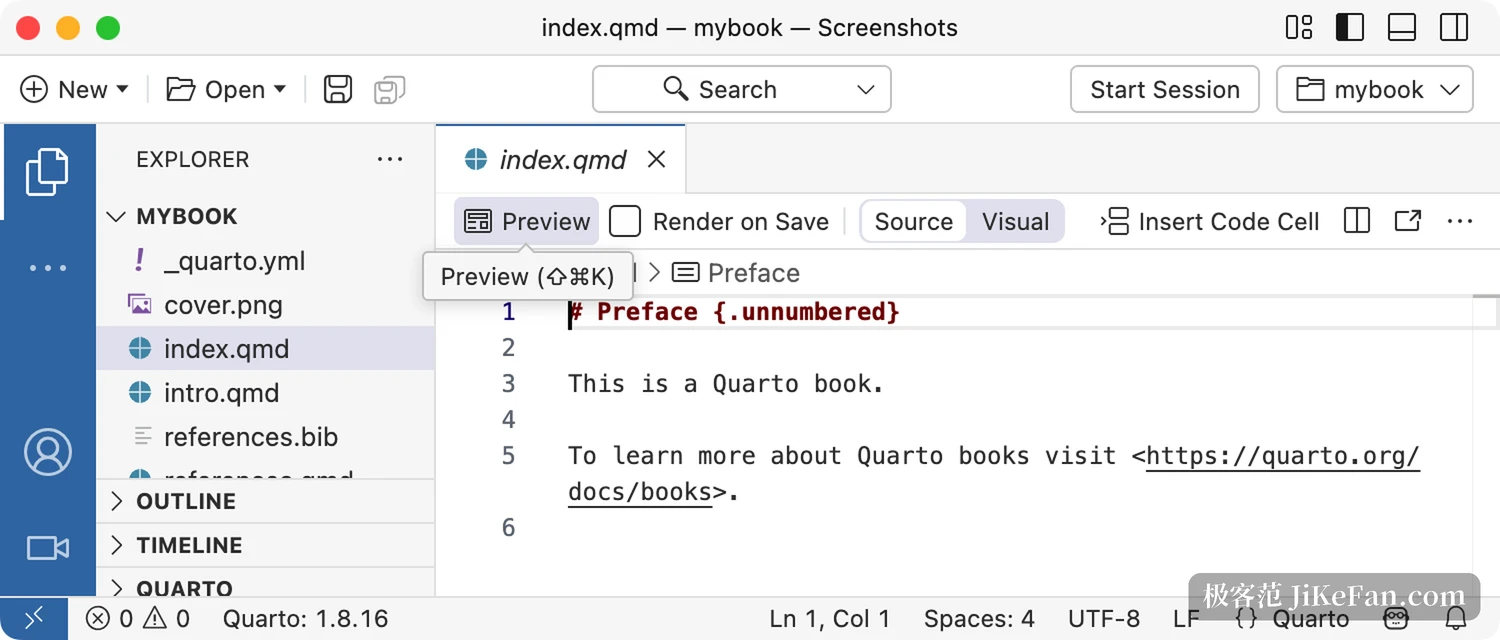
For anyone typesetting with Typst, two options named lof and lot now produce lists of figures and tables, the list title follows the document language and can be customised through crossref. The proof, remark and solution blocks move from plain text to theorem styling, and labelled blocks can be cross referenced. The way to write definition lists is settled as well, using a definition-list container that holds a nested bullet list, and that is the syntax the next major version will keep.
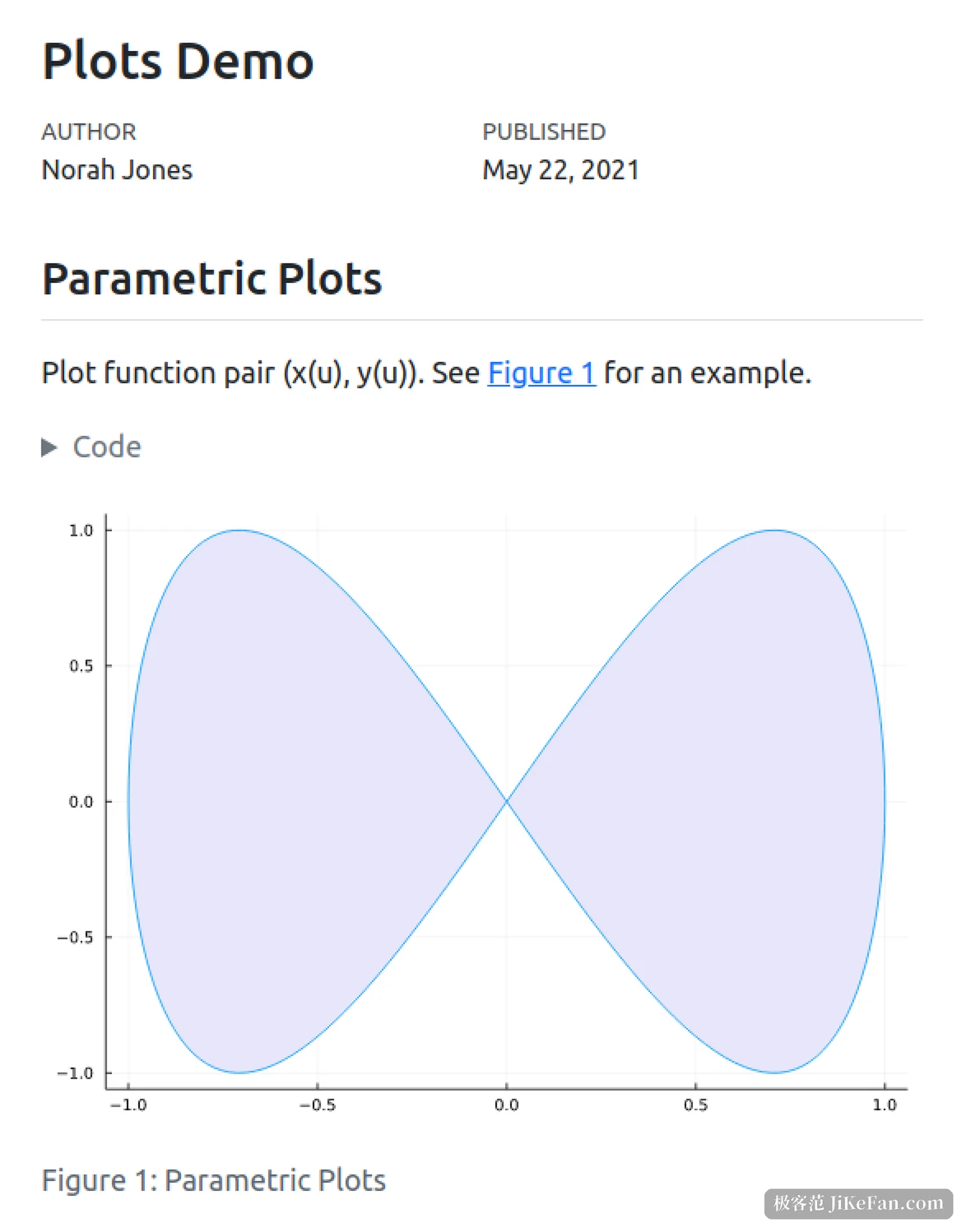
The Julia engine gains a keep-ipynb option, so an executed notebook can be saved next to the source file, and it also fixes a notebook execution that hung and a case where a metadata change failed to invalidate cached cell results. Shared metadata now reaches Pandoc templates and Lua filters as a merged value, so an inherited list such as keywords merges with the document own values instead of being replaced wholesale by the list in the document.
Who it fits, and who it does not
The comfortable zone is clear: people who need code, results and explanation written together. Data analysis reports, experiment records, course handouts, technical manuals and books that stay alive for years all have a hard requirement that a result be traceable to the computation behind it, and the single source model answers that directly. Where a team already works in RStudio or Jupyter, the migration cost is mostly spent learning the YAML options; the syntax itself is not difficult.
If all you want is a clean documentation site with no code that needs to run, the configuration Quarto brings will feel like dead weight and a lighter static site setup is enough. The PDF route still depends on a LaTeX installation, and its error output is not friendly to newcomers; switching to the Typst format sidesteps that layer, at the cost of a younger ecosystem. Render time deserves thought as well, since a project with heavy computation needs freezing and caching configured, or every rebuild repeats the work.
Read against 1.11, the centre of gravity has moved from piling on features to polishing reliability: certificate chains, accessibility, cache invalidation across language engines are all the sort of pain that only long term users meet. For people already using it, the reason to upgrade is the security fix. For anyone still watching, the sensible first step is to render one report you already write and see whether a single source file can replace the patchwork process in place today.