
AlmaLinux: a community owned enterprise system, free forever and binary compatible
Summary
A community distribution steered by a non profit foundation: binary compatible with the commercial enterprise system it follows and free of charge for good. The 10 line brings Btrfs, keeps the older x86-64-v2 architecture alive and turns on post quantum cryptography by default, with images from embedded boards up to mainframes, RISC-V included.
Recommend- Name
- AlmaLinux
- Version
- 10.2
- Pricing
- Free
- Open source
- Open source
- Operating system
- Linux
- Website
- https://almalinux.org
- Updated
- 2026-10-06 00:40
The open continuation of an enterprise system
A good number of companies built their servers on a community distribution that stayed binary compatible with a commercial enterprise system, and when the upstream moved to a rolling preview model, keeping production on a stable line turned into a real problem. AlmaLinux exists for exactly that need. It is a community distribution owned and governed by the AlmaLinux OS Foundation, it stays binary compatible with the commercial enterprise system it follows, so applications already in place migrate across without being rebuilt, and it is free of charge for the people who use it, with no licence fee and no subscription gate at the door.
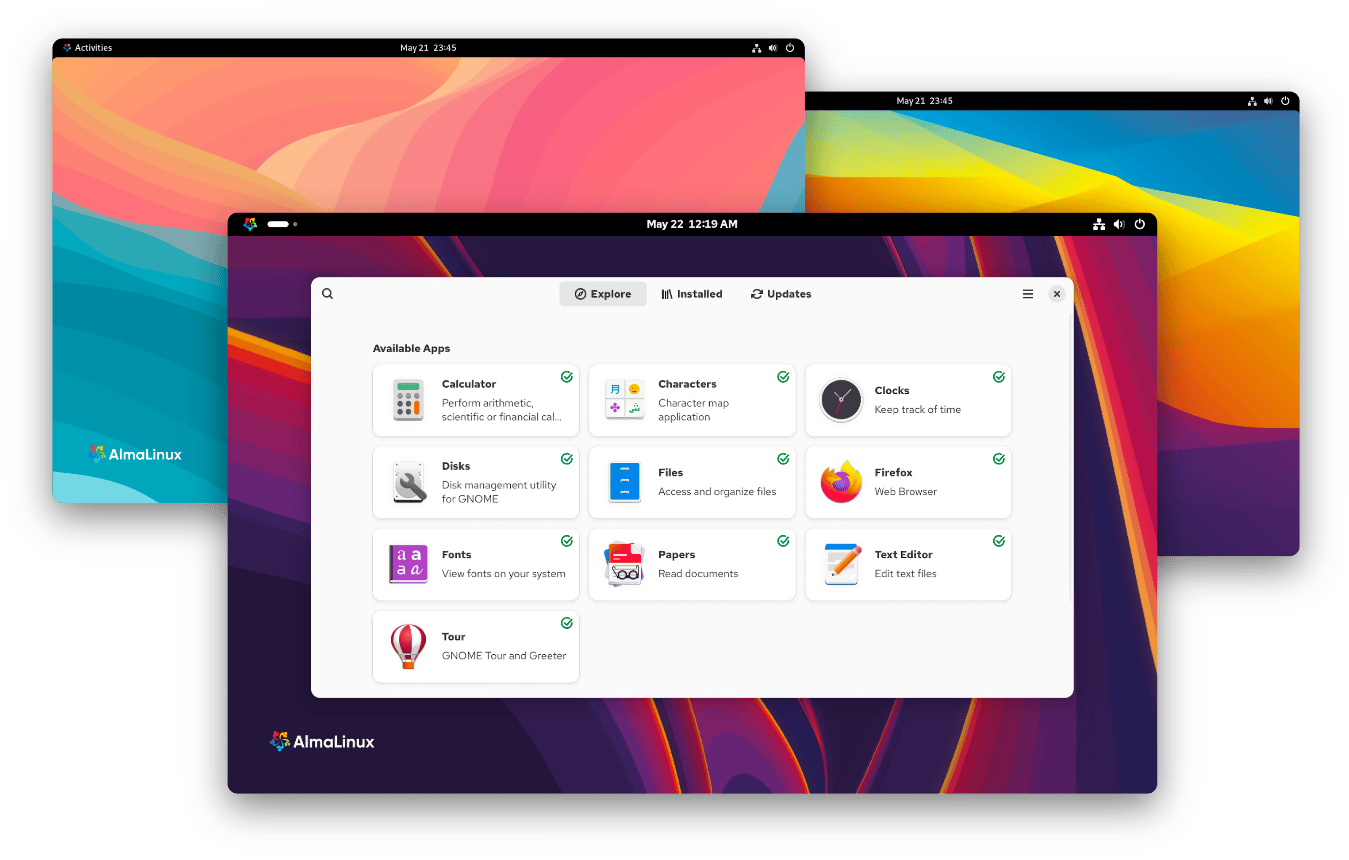
Held by the community, governed in the open
It does not belong to any single company. The foundation is a non profit registered in the United States, its board is elected by the community, and both the direction of the project and the decisions about where it deliberately differs from upstream are settled through open committee processes. That structure is the reason the project cannot be turned by a change of strategy at one firm, and it is a large part of why hosting providers and businesses are willing to put it into production. The community also keeps busy forums, chat channels and a monthly letter, so the route for reporting a problem is visible. As things stand it supports x86, ARM, PowerPC and mainframes among other architectures, has followed the newer RISC-V work, and offers an image for everything from an embedded board to a cloud instance.
The 10 line: compatible, and with opinions of its own
The current stable release, 10.2, keeps to the same update rhythm as the commercial system it tracks, while the community adds what it judges worth adding. Btrfs support has arrived and the system can be installed directly onto that format, so snapshots and checksums become another way to look after data. The older x86-64-v2 architecture is kept as a build, which lets servers that upstream has left behind keep working. Frame pointers are switched on by default again, which makes system wide profiling practical. Support for things like SPICE remote desktops has come back as well. On security, the default policy already turns on post quantum algorithms, and the package signing chain has moved to a newer standard, which is forward looking by any measure.
Migration and ecosystem are both in place
The ELevate tool from the project upgrades an older installation in place to a new major version, ready made images sit in the marketplaces of the big clouds, container images cover every architecture, and the way it is deployed matches the mainstream enterprise distribution, so nothing has to be relearned. Driver work from hardware makers follows along, the official software sources for graphics cards and computing stacks are connected, and artificial intelligence and high performance work do not feel out of place. As of September 2026 the test build of the next point release is already out.
Who it is for
If a server needs an enterprise grade system with a foundation behind it, no invoice attached and a guarantee that the software will still install next year, this is worth serious consideration. What it asks in return is patience with the fact that it follows somebody else's release rhythm rather than setting its own, and that the interesting additions arrive through the community committee rather than a vendor roadmap. For a machine that has to stay up, that trade is usually the right way round.
What binary compatibility actually saves
The phrase sounds technical until the bill for the alternative arrives. Software written for the commercial system does not have to be rebuilt against different libraries, and the people who wrote it do not have to be called back to make it work again. Installed packages keep their names, the configuration files keep their places, and the scripts that were written years ago and half forgotten keep running. For a company whose servers carry something that matters, that is the difference between an afternoon of work and a quarter of arguing about who broke the build.