
-
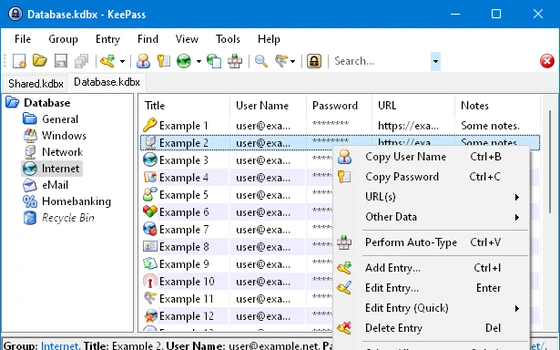
KeePass 2.61.1 locks the whole vault into one file and types the password for you
KeePass keeps every account inside a single encrypted database and asks you to remember one master key. Version 2.61.1 arrived on 1 May 2026 with a list of fixes, and Auto-Type fills forms by simulating keystrokes.
-
KeePassXC 2.7.12 keeps every password in one encrypted file you place yourself
KeePassXC 2.7.12 is free and open source on Windows, macOS and Linux, storing every account in one local encrypted file with a browser extension for autofill and a generator built in. Data never sits on a vendor server, and no subscription is charged.
-
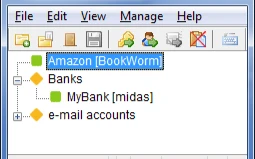
Password Safe: the password manager that never phones home
One encrypted file on your own disk, no cloud sync, no telemetry, no account: a password vault whose trust model is a file and a master password, nothing else.
-
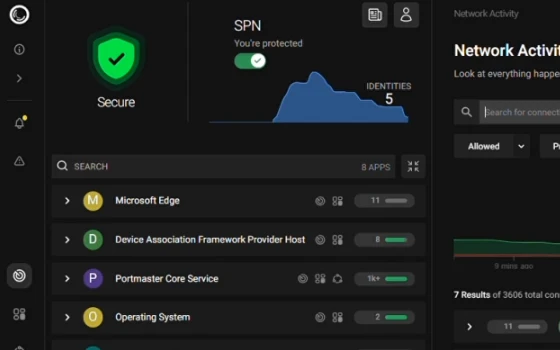
Portmaster review: a network gate you can actually see
Portmaster is an open source application firewall from Safing that shows every outbound connection in real time and lets you allow or block it in one click, with encrypted DNS and built in filter lists under the GPLv3.
-
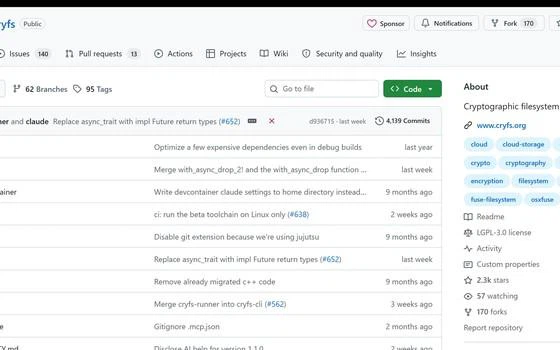
CryFS: hiding the shape of your files, not just their contents
CryFS is an open source encrypted filesystem for cloud folders: it splits files into encrypted blocks, scrambles names and directory structure, and gives you a normal mounted folder on the desktop while the cloud only ever stores unreadable chunks.
-
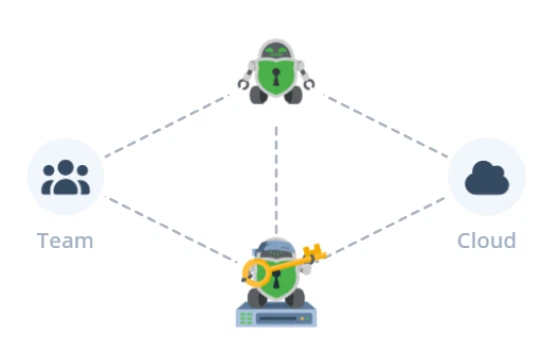
Cryptomator: encrypt files on your own machine before the cloud ever sees them
Cryptomator is an open-source tool that encrypts files in a local vault with AES-256 before they sync, so a cloud provider only ever stores unreadable data.
-
Eraser: a right-click that really removes a file, even after the bin is emptied
Eraser overwrites the sectors behind a deleted file on Windows so routine recovery fails, and it also cleans the free space left over from earlier deletions.

-
ClearURLs: it cuts the tracking tail off a link before you share it
An open source browser extension that leans on a community maintained rule library to strip tracking parameters out of addresses in the background. It cleans a whole list at once, copies a clean link straight from the context menu, blocks link auditing and redirection hops, and sits there so lightly that you forget it is running.
-
Ghostery: see which company is following you, and answer the cookie prompt with no
An open-source privacy extension that has been running for more than a decade. It blocks ads and trackers, swaps personal identifiers in requests for random values, and answers cookie consent prompts with a refusal on your behalf. Every page shows how many trackers it carried and which companies they belong to.

-
AdGuard DNS 2.23: block ads one layer earlier, for every device in the house
A public resolver that answers ad, tracking and phishing domains with a name that does not exist, so nothing on the network can reach them. It speaks every mainstream encrypted protocol, keeps no logs, needs no client, and its core is open enough to host yourself. The base service is free.

-
Zen: blocking ads and trackers across the whole system, not only in the browser
An open-source privacy tool that filters advertising and tracking requests for every application on the machine through a local proxy, rather than working as a browser extension. MIT licence, no telemetry, no account.

-
第 1 / 1 页