Red Hat Enterprise Linux 10: post-quantum crypto, an assistant in the terminal, ten years of support
Summary
An enterprise server distribution on a 6.12 kernel: ten years of support per major version, a frozen base with rolling application streams, post-quantum cryptography, image mode updates and a command line assistant.
Recommend- Name
- Red Hat Enterprise Linux
- Version
- 10.2
- Open source
- Open source
- Operating system
- Linux
- Website
- https://www.redhat.com/
- Updated
- 2026-10-06 20:47
Red Hat Enterprise Linux, RHEL to anyone who has had to type it, is the commercial server distribution that a large share of enterprise estates run on. Racks in a data centre, machines in public clouds, devices at the edge, mixed arrangements: the same base sits underneath most of them. As of 2026-09 that position has not really moved. The 10 series arrived in 2025-05 on a 6.12 kernel, and the current maintenance release is 10.2, updated in 2026-05.
What the distribution sells is predictability rather than novelty. Every major version carries a ten-year lifecycle, during which security patches and bug fixes arrive through two repositories: BaseOS for the system itself, AppStream for the user-space stack above it. Application Streams is the mechanism that lets language runtimes, databases and container tooling move independently without dragging the base along. Frozen underneath, rolling on top is a fair summary, and for an organisation that measures change in years rather than weeks it is the whole argument.
Hardware coverage follows the same logic. The 10 series runs on 64-bit x86, 64-bit Arm and the enterprise architectures behind large machines, so a rack of ordinary servers and a big iron system can share one administration interface instead of two.
What a 6.12 kernel brings
The kernel underneath is 6.12, and several additions aim at workloads that used to need tuning by hand. Real-time scheduling gained a deadline server at kernel level, which hands ordinary tasks a guaranteed window to run in and stops real-time work from starving them. The security stack gained support for post-quantum algorithms in line with FIPS requirements, plus Landlock, a module that lets a container process restrict its own reach into the file system with rules the kernel enforces. Accelerator drivers validated by the vendor cover mainstream GPUs, which is what makes a server usable for inference or training without assembling a driver stack by hand. And image mode with a soft reboot lets an update be built, tested and rolled back as an image, which is the shape a large automated fleet needs.
An assistant inside the command line
RHEL Lightspeed is the first generative assistant shipped inside the system, and it lives where administrators already are: the command line. Questions can be asked in ordinary language, configuration suggestions come back, and commands get explained instead of guessed at. For someone new to the platform it behaves like a consultant who is always on call; for someone with twenty years behind them it shortens the search through documentation. Because the assistant works offline from the local command line, servers on restricted networks receive the same help as anything else.
Containers and the mixed estate
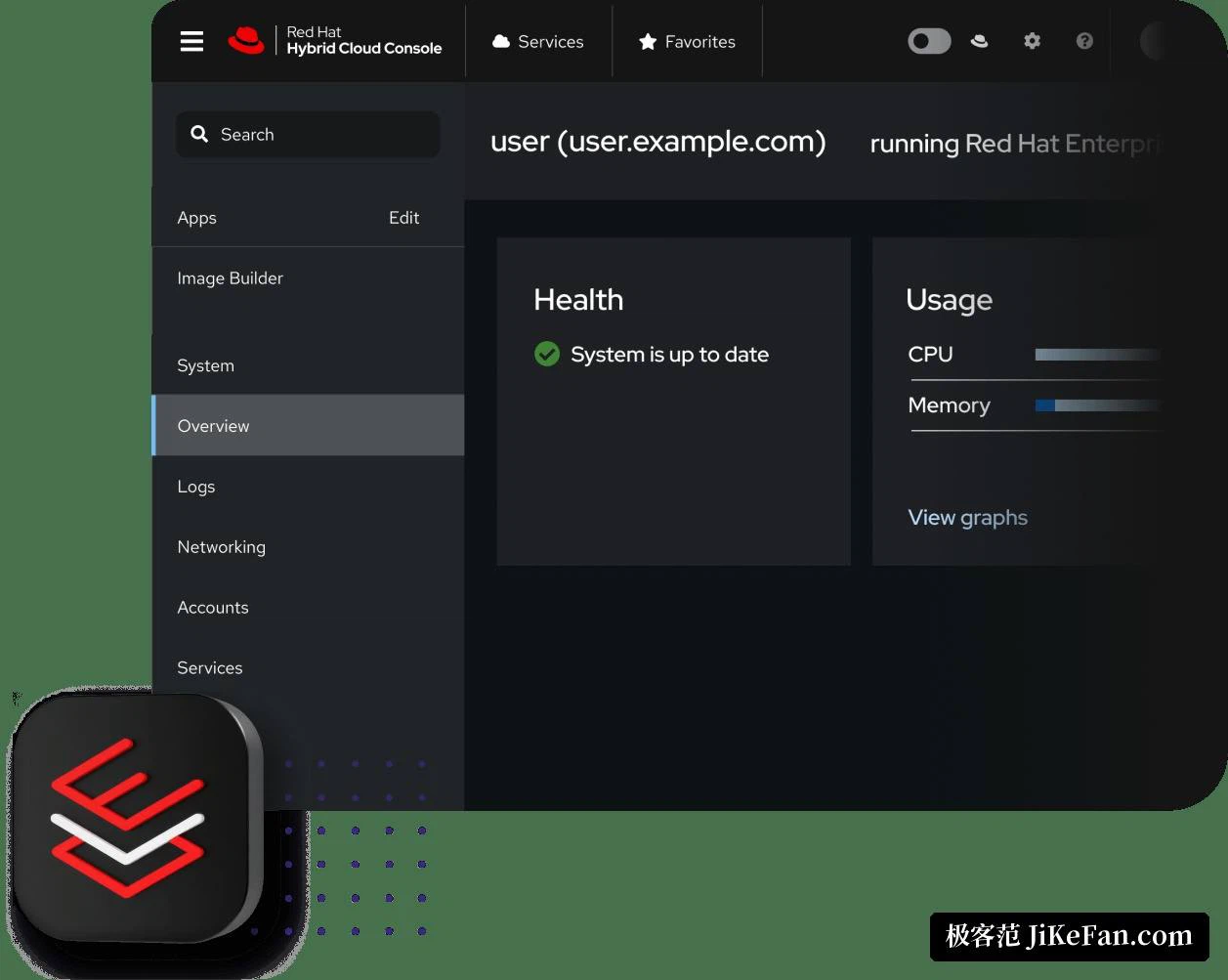
Containers are integrated rather than added on: the Podman toolchain runs containers without a daemon, orchestrates pods, and binds into the system through Quadlet units. Image Builder produces customised system images containing exactly the packages and configuration required, and those images deploy to bare metal, virtual machines and cloud alike. Above that sit a management console and a content delivery network, so registering, patching and configuring hundreds or thousands of servers becomes one central job instead of a tour of the estate.
A subscription, and a free door for developers
The distribution is sold as a commercial subscription. The fee covers updates, technical support and compliance work, and the pricing itself is not the subject here. What matters more for a reader deciding whether to try it is the developer programme: registered individuals get a free entitlement that includes the full enterprise feature set on a limited number of machines. That is enough for certification study, a laboratory, or development and test work. Companies, meanwhile, buy by physical core, socket or virtual machine count, so the cost scales with the estate rather than with the headcount.
Who it suits
Three groups, roughly. Organisations that need a server base with a decade of support and an audit trail behind every patch, and for whom an unexpected upgrade is a larger risk than a licence fee. Teams running containers across a mix of on-premises hardware and cloud, who want one image pipeline rather than three. And administrators who would rather ask a question in the terminal than open a browser, which is what Lightspeed exists for.
The interesting shift in the 10 series is not the kernel version. It is that a distribution whose selling point has always been that nothing surprising happens now ships things, post-quantum cryptography and a language assistant among them, that would have looked experimental a few years ago. Doing that without giving up the ten-year promise is the hard part, and it is the part worth watching.