
Peppermint OS: a light distribution for old machines that lets you pick the init system
Summary
Peppermint OS is a lightweight Linux distribution for old and low-spec machines, with Xfce as its desktop. It ships two build lines, one on Debian and one on Devuan, and the Devuan line lets the installer choose SysVinit, OpenRC or runit instead of systemd.
Recommend- Name
- Peppermint OS
- Version
- 2026
- Pricing
- Free
- Open source
- Open source
- Operating system
- Linux
- Website
- https://peppermintos.com/
- Updated
- 2026-10-06 22:11
A road left open for old hardware
Peppermint OS is a lightweight Linux distribution aimed at old and underpowered machines, with Xfce as its default desktop. The idea is to preinstall as little as possible: keep the weight of the system itself very low, let the user add the software they actually need, and the result stays responsive on hardware that newer releases have given up on. The published minimum is 1GB of memory and roughly 10GB of disk; in practice 2GB of memory with a 20GB solid-state drive is a good deal more comfortable.
That last sentence is the honest part of the pitch. A distribution can boot inside a gigabyte, but a browser with a few tabs is what people actually run, and that is where the second gigabyte earns its place.

Two build lines, one choice to make first
Before downloading, the first decision is the base. Both lines look and behave the same on the surface; what differs is the init system underneath. The mainline build follows Debian stable and therefore uses the same service manager as most distributions, which makes compatibility and the supply of packages the safest of the two. The Devuan build carries no systemd at all, and the installer offers SysVinit, OpenRC or runit instead. The price is stated plainly: an application that strictly depends on systemd will not run on that line.
For most people the Debian line is the answer, and the Devuan line exists for the minority who have a reason. Having both published under one name is unusual, and it is the most interesting thing about the project.
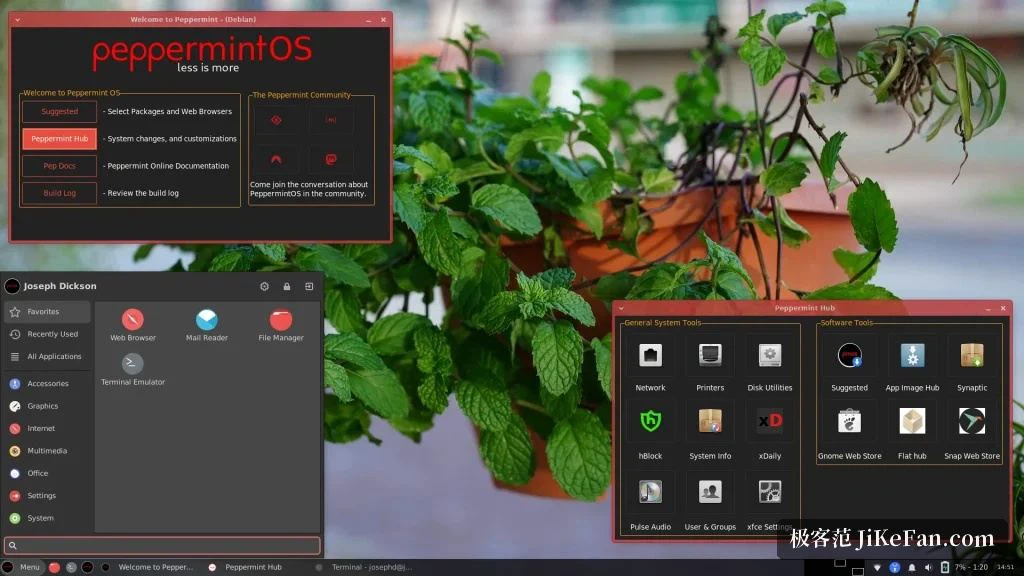
The Devuan build released in 2026
The Devuan Excalibur build published on 12 June 2026 is the recent headline update. It pairs a current Xfce desktop with a long-term-support kernel, and the installer is Calamares, now migrated to the newer Qt toolkit. Partitioning offers Btrfs, EXT4 or XFS. Package sources moved to the Deb822 format, matching what Debian-based systems have been doing lately. The image also adds graphics drivers for AMD and Intel hardware and more wireless firmware, and it arrives with the Brave browser included. Every image is 64-bit.
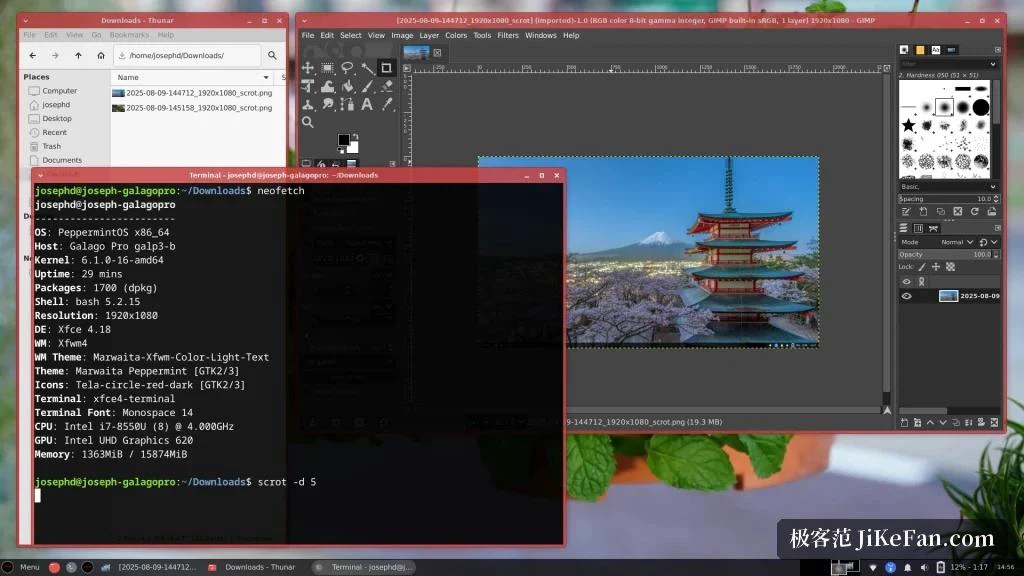
Which image to pick
Each line comes in several shapes. Flagship is the ordinary Xfce image. Fully Loaded packs in more applications and firmware, which saves trouble on a machine that is fussy about its wireless card or its graphics. Mini is a network installer, meant for anyone who prefers to build up from a minimal system. The community also maintains a GNOME Flashback variant. The download page offers two routes, a hosting service and mirrors, and checksums sit next to the files; comparing them before writing a USB stick takes a minute and saves an evening.
The team is also working on a branch built on a different independent distribution, currently in testing. That is worth knowing before committing to a long-term install, not because the existing lines are going anywhere, but because a small project's attention is a finite resource.
Before the USB stick goes in
Two checks are worth doing while the machine can still reach the network. Confirm that the wireless card in it is covered by the firmware inside the image being downloaded, which is the reason the Fully Loaded variant exists at all. And write the current bookmarks down somewhere else, because a machine that has run one distribution for years tends to keep the only copy of a few things inside that installation.
One point of temperament as well: changing the system on an old machine changes the software, not the age. Fans, disks and batteries do not improve because the distribution is light. If the machine was already slow to start, look at the disk before blaming the operating system.
If there is an old machine that newer systems have abandoned, this is a reasonable one to try first: low footprint, a familiar desktop and a friendly installer. If systemd is not something you care about, take the Debian mainline; if you want to decide the init system yourself, look at the Devuan build instead.