
-
Astro 7.4.1 hands the build pipeline to Rust and Vite 8, then prints a timings report
Astro 7.4.1 moves the component compiler and the Markdown pipeline into Rust and pairs with Vite 8, for builds 15 to 61 percent faster. The build command also takes a timings flag that shows where the time went, stage by stage and plugin by plugin.

-
KDiff3 1.12.5 compares three files at once, an open source merge tool under the GPL
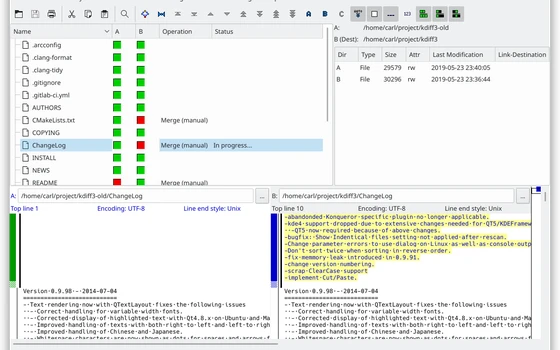
KDiff3 1.12.5 is out with three way merging, character level highlighting and a built-in conflict editor, licensed GPL-2.0-or-later and running on Windows, macOS and Linux.
-
k6 2.3.0 puts load testing in the pipeline, with JavaScript scripts and thresholds that decide pass or fail
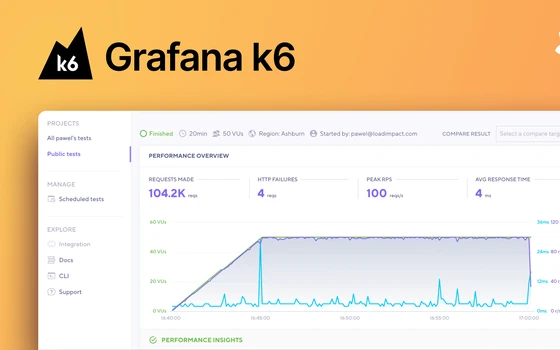
k6 runs on a Go engine and its scripts are written in JavaScript or TypeScript. A threshold that is missed fails the run, results can land in Grafana, and the current release is 2.3.0.
-
ripgrep 15.2: recursive search that skips hidden files and noise
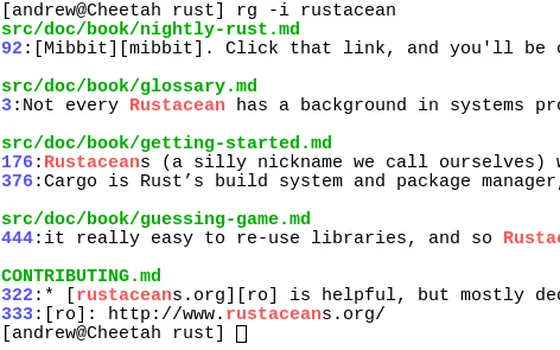
ripgrep is a recursive search tool written in Rust. Version 15.2 honours three layers of ignore rules by default, steps around hidden files and irrelevant directories, and still offers type filters, a PCRE2 engine and search inside compressed files.
-
Code::Blocks 25.03 adds four compilers and a sharper debugger
Code::Blocks is a free open source IDE for C, C++ and Fortran built around a plugin framework of its own, with a self made build system and GDB debugging inside. Release 25.03 tightens high DPI handling and adds C++23 and C++26.
-
Eclipse IDE: an open source development environment on a quarterly clock
An open source, multi language integrated development environment and platform. Official packages cover Java, C and C++ and PHP, the plug-in catalogue is large, the installer bundles a JRE, and Windows, macOS and Linux are all supported. The current release is 2026-09.

-
Tesseract OCR 5.5.3: an engine that turns scans back into text
An established open optical character recognition engine that converts text in images and scans into editable characters. Language data installs separately per language, recognition runs locally without a network, and the engine is called either from a shell or from another program. Version 5.5.3, Apache-2.0.
-
Neovim 0.12.6: a terminal editor configured in Lua, with a language server inside
A terminal text editor that keeps the Vim editing model while moving configuration to Lua, with a language server client and Tree-sitter parsing built into the core. The current release is 0.12.6, published under the Apache licence.
-
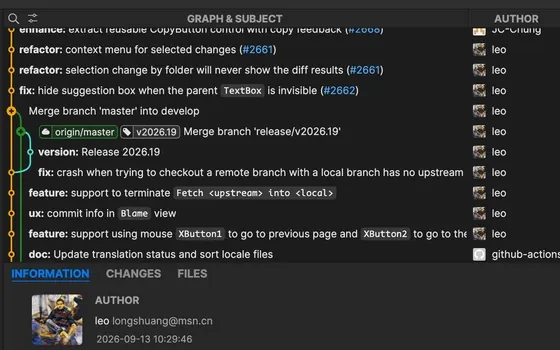
SourceGit: a cross platform Git client that draws history as one graph
An open source graphical Git client for Windows, macOS and Linux that puts branches, the commit graph and merges into one tidy window. It adds a conventional commit helper and can draft commit messages through a service you configure yourself.
-
Homebrew puts install, upgrade and uninstall behind one command, and every package gets its own keg in the Cellar
Homebrew folds install, upgrade and uninstall into one set of commands, gives each package a keg of its own and links it into the prefix; it spans macOS, Linux and WSL, and one Brewfile reproduces a whole machine.

-
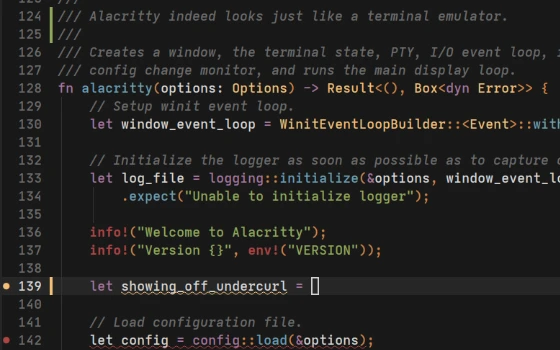
Alacritty review: a terminal that refuses to do anything but go fast
No tabs, no splits, no settings dialog. One window, GPU rendering and a single TOML file, on the theory that a terminal should do one thing perfectly and hand everything else to better tools.
-
Biome review: one binary for formatting and linting, and it is fast
Formatting and linting used to mean two configurations, two plugins and two sets of errors that occasionally fought each other. Biome folds both into one binary with one config file, and the speed changes how you use it.

-
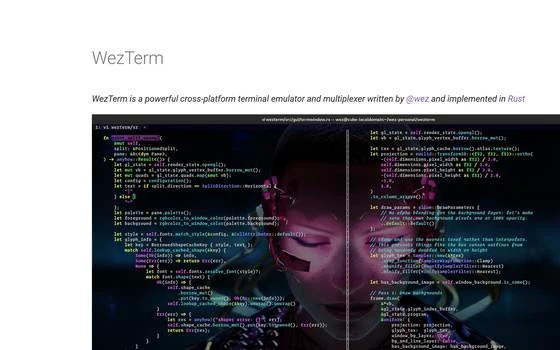
WezTerm Review: A GPU Terminal With Multiplexing Built In
WezTerm folds a terminal and a session multiplexer into one program: remote sessions survive a dropped connection, panes and tabs mix local with remote, and the configuration reloads while the window stays open.
-
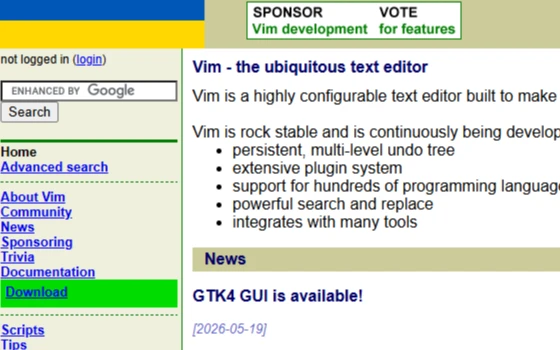
Vim Review: The Modal Editor That Outlives Every Trend
Vim is the modal editor that ships with nearly every Unix server: keyboard driven, scriptable, endlessly extensible, and stubbornly fast on any hardware. The learning curve is real, but it is paid once and collected for decades.
-
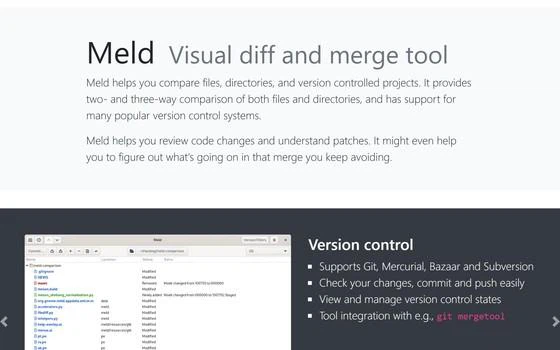
Meld shows a diff instead of describing one
Two configurations that differ in one character, a merge conflict with three sides, a folder that gained files you did not expect: Meld draws all of it side by side, colours the changes down to the character, and lets you move each one across with a click.
-
第 1 / 3 页