
-
Anki: open source spaced repetition cards with FSRS built in
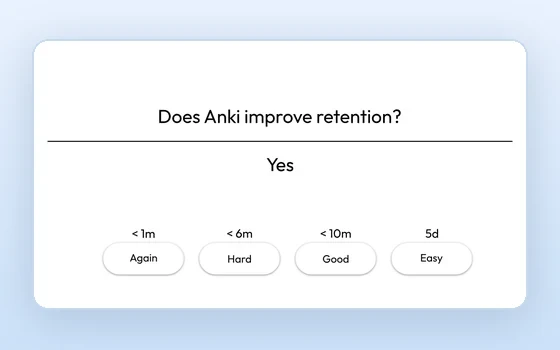
Anki is an open source flashcard program for spaced repetition that hands the timing of reviews to the FSRS scheduler built into it, and includes a free service for syncing between devices. It suits learners who need to hold a large mass of small facts over the long run.
-
Quizlet: a free flashcard platform with study modes and classroom games
A study platform built around flashcards. You can create or find card sets, drill them with flip, test and match modes, and turn notes or PDFs into study guides, cards and practice tests. It runs in a browser and on phones, and the library is built by teachers and students together.
-
Duolingo: five minutes a lesson, and the habit does the rest
Duolingo breaks language study into lessons of a few minutes, with instant feedback, a streak counter and a leaderboard. More than forty languages, the whole course free to use, progress synced between web and phone, and conversation practice on the paid tier.

-
Khan Academy: a free curriculum from preschool to university, without a single advertisement
A non-profit learning service that costs nothing to use. Courses run from preschool numeracy to early university mathematics, science, grammar, history and financial literacy, with practice built around mastery and dashboards for parents and teachers. More than fifty languages, no advertising.

-
Connected Papers maps a field instead of handing you a list
Give Connected Papers a DOI, an arXiv link or a paper title and it screens roughly 50000 papers to draw a graph of the several dozen closest ones, laid out by similarity rather than by citation. The free tier builds 5 graphs a month with every feature included.
-
SciSpace aims to cover the whole research loop, from finding papers to drafting
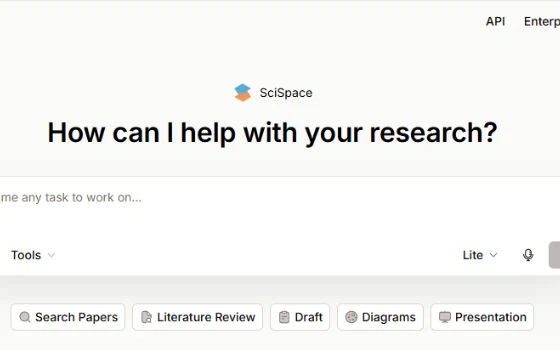
One prompt box asks how it can help with your research, five starters sit beneath it, and behind them a chain of tools: search in three depths, a review with a published benchmark, chat over a PDF, drafting, diagrams, citations and a detector.
-
Consensus puts a dial on the literature, so you can see how divided the evidence is
Ask a yes-or-no research question and a meter shows how far the published evidence agrees. Deep search builds the strategy for you: expanding keywords, hunting opposing claims, walking the citation graph across 220 million peer-reviewed papers.
-
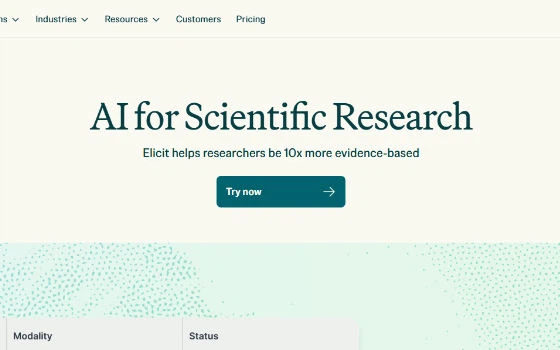
Elicit runs the literature review and hands back evidence with sentence-level citations
Search 138 million papers and 545,000 clinical trials, then have the agent assemble a report, a table or a slide deck in which every claim carries a citation back to the sentence it came from.
-
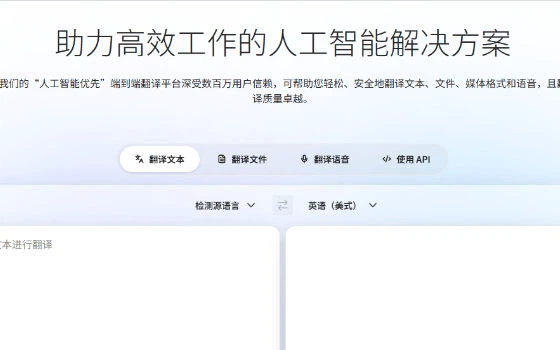
Youdao Translate covers 107 languages, and the web version is free
The translation platform from NetEase's Youdao: paste text, upload documents, translate web pages and audio or video, with polishing, grammar correction and an AI assistant beside the box. The mobile app covers 107 languages, and enterprise prices start at 498 yuan per person a year.

-
DeepL translates a whole document with its layout intact, 50000 characters a month for free
An AI translation service whose web translator is free within a monthly character allowance. Its strongest feature is document translation, which returns Word, PDF and PowerPoint files with the original layout still in place.
-
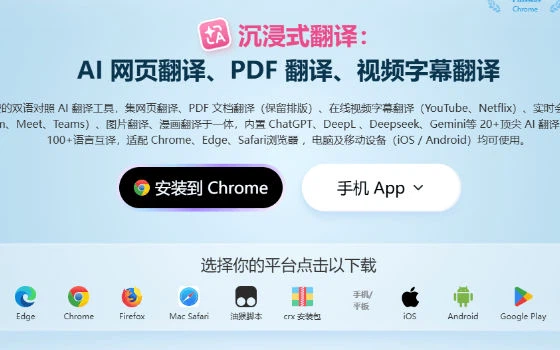
Immersive Translate puts the translation under the original, not in its place
A browser extension that turns a foreign page into two layers: the original paragraph stays where it is and the translation sits beneath it. PDFs, subtitles and online meetings are covered too, and the free allowance is enough for personal reading.
-
Moyu Danci: Vocabulary Drilling Designed to Hide Inside a Workday
Moyu Danci is a vocabulary tool for people who study in the gaps of a working day: a word window that fades into the background, a key that hides it, and a review schedule that decides what comes back and when.

-
第 1 / 1 页