
-
WinZip 30 ships: three consumer tiers, all yearly, and encryption is the real thread
WinZip 30 is out with reworked file associations and faster startup, three consumer tiers that are all billed yearly, AES-256 encryption and file wiping as the product line, a 21 day trial without a card, and 30 days to ask for a refund.

-
lzop 1.04: nine compression levels from a GPL command line compressor
lzop compresses files through the LZO library, ships under the GPL, and puts speed ahead of ratio on both sides of the job. Version 1.04 defaults to level 3 and keeps the source file, which suits backup archives.

-
BZip3: blocks up to 511 MiB and parallel compression, all open source
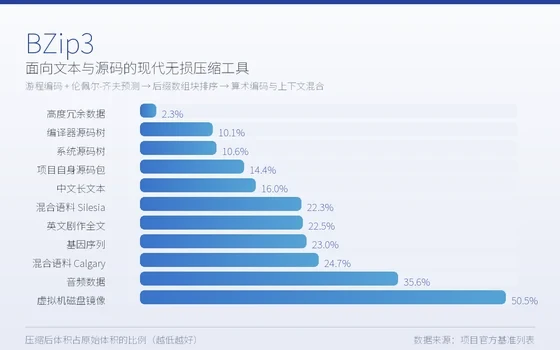
BZip3 compresses text and source code without loss, pushes the block ceiling from 1 MiB up to 511 MiB, adds a Lempel-Ziv predictor ahead of the transform, swaps in context mixing for entropy coding, and ships six command line tools.
-
XZ Utils: A Free Compressor Built Around the LZMA2 Ratio
XZ Utils is free general purpose data compression software built on LZMA2, producing the .xz format that source packages and firmware images so often use, with a liblzma library other programs can call directly.

-
Keka: the archiver macOS never shipped
An open source archiver that turns compression into a drag onto an icon: broad format support, split volumes, password protection, free from the developer site, and native on Apple silicon.

-
B1 Free Archiver is free in the way that word used to mean
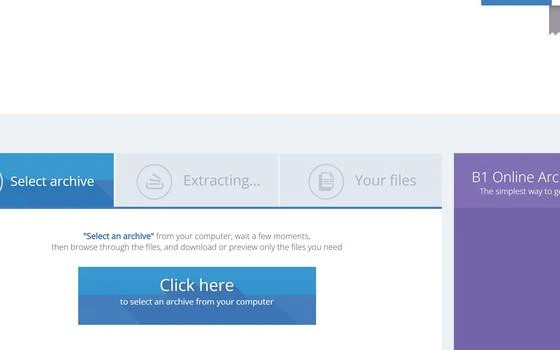
B1 Free Archiver opens RAR, 7Z, ZIPX, CAB and JAR as readily as it creates ZIP, costs nothing for personal or company use, asks for no account and runs on every major platform.
-
LZ4 1.10: a compression library that aims at memory bandwidth
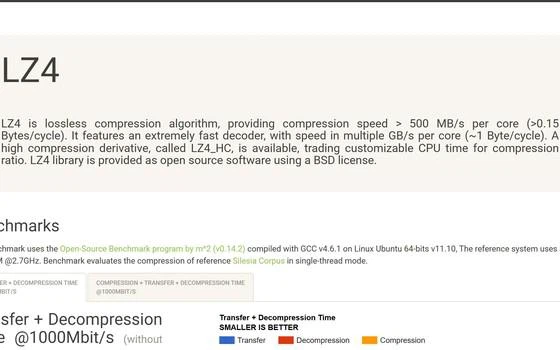
LZ4 is an open-source lossless compression library built for paths where data cannot wait: more than 500 MB/s of compression per core, decompression in the gigabytes per second per core, which usually hits memory bandwidth as the ceiling. Ratio is traded away for latency low enough to sit inside real-time traffic, and version 1.10.0 turns multithreading into a supported feature.
-
ezyZip: archiving that runs in the browser and never uploads your files
ezyZip has been running since 2009 and packs or unpacks archives inside the browser tab, so files never reach a server. It creates ZIP, 7Z, TAR, ISO and game archives, opens more than 250 formats, and converts between archives, images and virtual disks.

-
B1 Free Archiver: one free archive tool for every device you own, reading nearly forty formats
Official builds for Windows, macOS, Linux and Android plus a web version, no ads and no account: packs open to b1 or zip, and nearly forty formats unpack, including split and password-protected archives.

-
Snappy 1.2: Google's compression library, the throughput monster at 250MB a second
Snappy does not chase the smallest output, it chases speed: better than 250MB a second compressing and more than 500MB a second decompressing on a single ordinary core, at the cost of output twenty percent to twice the size. That trade is why it sits underneath databases, large data systems and log pipelines.
-
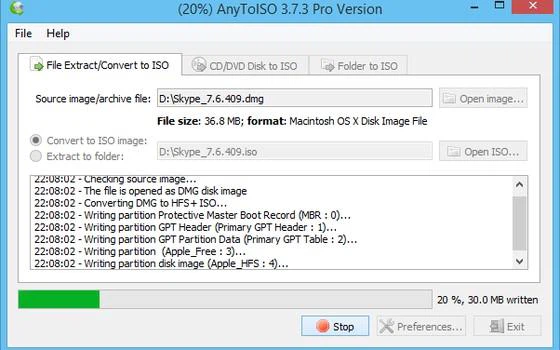
AnyToISO: every awkward disc image turned into a standard ISO
A small tool for one specific irritation: disc images that arrive in formats the burning and mounting software will not open. It turns the common ones into a standard ISO, builds an ISO from a physical disc or a folder, and unpacks the contents without mounting anything first, on both desktop systems.
-
pixz makes xz archives parallel and lets you reach inside them
A parallel, indexed compressor built on the xz format. It uses every core on the machine by default, keeps an index so a single file can be pulled out of a large archive without unpacking the rest, and handles tar files in one step. Open source under a BSD licence.
-
GNU tar: the archive format that carries most of open source
GNU tar packs files and directories into one archive while keeping structure, permissions and timestamps, and leaves compression to gzip, xz or zstd.
-
GNU tar: an archiver that only packs, leaving the squeezing to gzip and xz
GNU tar turns a tree of files into one container and hands the shrinking to gzip, xz or zstd, so creating, extracting, listing and pulling out a single file each take one short command.
-
第 1 / 1 页